5 common mistakes to avoid when starting a recruitment business
Checkout our list of 5 common mistakes to avoid when starting a recruitment business to ensure you are setup to succeed
Starting a recruitment business
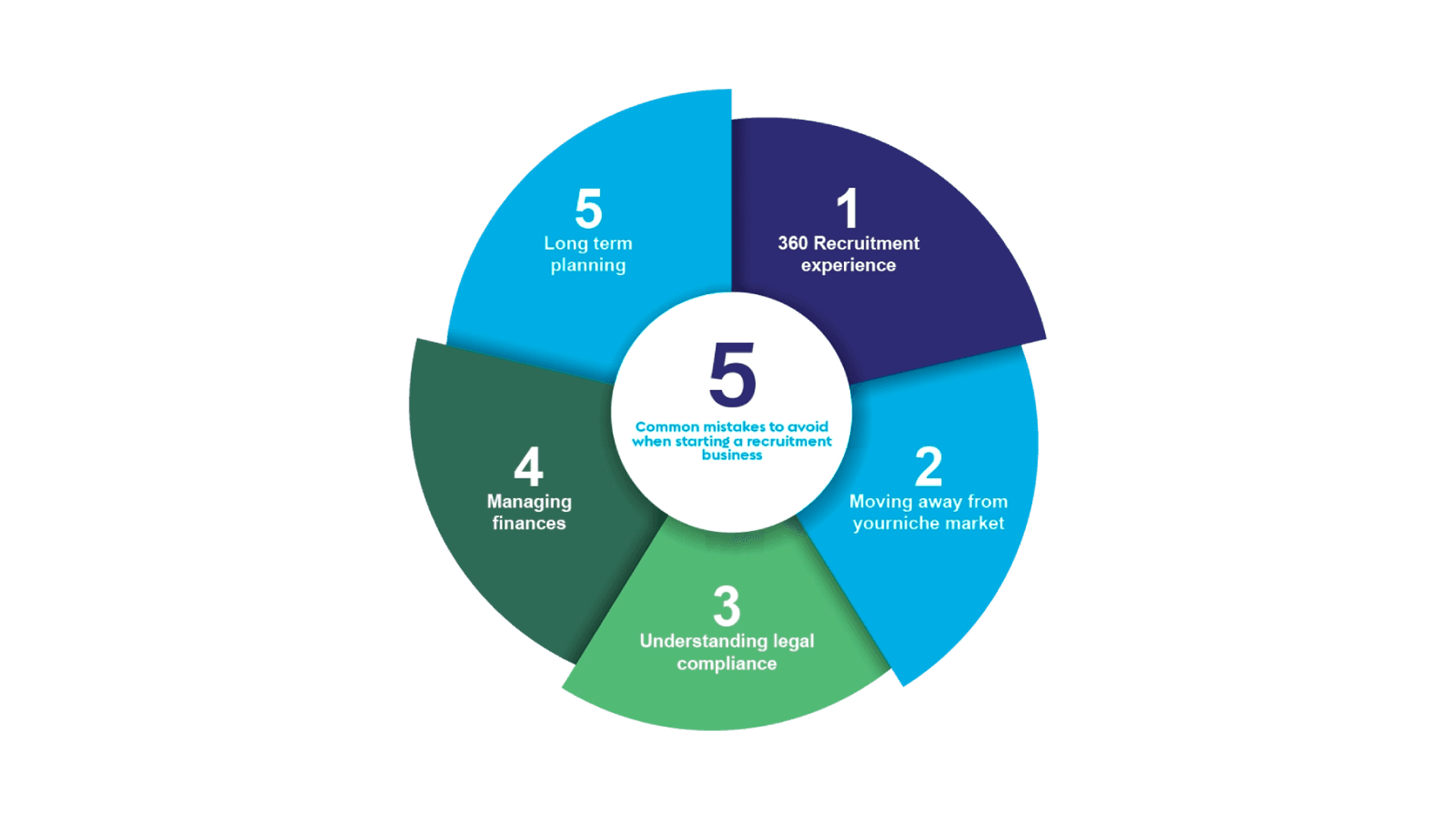
Starting a recruitment business can be a rewarding venture, but it comes with its own set of challenges. Ultimately SSG Recruitment Partners exist to remove these challenges, and by partnering with start up businesses we take care of the usual problems that occur. We have extensive experience of launching recruitment businesses and providing expertise from our in house recruiters that have been there and done it. using this expertise, we’ve put together the 5 common mistakes to avoid when starting a recruitment business.
1. 360 recruitment experience
Have you been there and done it all? The most successful recruitment entrepreneurs have had prior experience of the entire recruitment lifecycle. By that we mean managing everything from client acquisition right through to placing candidates. Some recruiters maybe working in larger agencies may only have experience of parts of the process. It’s quite common that current clients will be handed over to a recruiter and they will then deal with the candidate sourcing, placements and negotiation stages.
These are all good skills to have but ideally you will have built your own desk. Having the skill set and experience of identifying and securing new clients, building relationships, and understanding their hiring needs is vital. However, add in the ability to source candidates and match them with open positions and grow your desk off the back of good client retention and you have the skill set required to start your own recruitment business.
2. Moving away from your niche market
We see this so often from recruiters that contact us. I’m working in the engineering sector but want to start a business in the education sector – why? A common reason is to get around any restrictive covenants that are in place from the current employer. Short term this may sound like a good solution but experience says this is usually a mistake. Stick to what you know and have been successful at! Once setup and established you may start to diversify into new sectors and we have seen some of our partners do this successfully.
Trying to cater to every industry and role is often a temptation for new businesses, especially if things are particularly tough early on. Unless you have come from a similar agency that was successful in doing this, this is not a route we would recommend going down. Opportunities may arise with some clients that you have built a relationship with that are outside of your expertise. It’s understandable that you don’t want to turn down the business but on the other hand you don’t want to take on more than you can chew. Not having the relevant expertise or candidate base to draw from could damage that relationship.
If these opportunities arise that are outside of your niche, consider working with other agencies on a fee share basis. This is an advantage that our network of recruitment partners enjoy. The SSG fee share platform allows partners to share open positions and split the fee with any partners that have expertise in that sector.
3. Understanding legal compliance
This can be a complete minefield and will differ depending on your circumstances. From the basics of ensuring that you comply with company regulations and employment laws, things can get quite complex when dealing with different countries and markets. Things to consider may include contractual terms with clients. These need to be as watertight as possible as even in the best relationships these can be open to interpretation and loop holes. Where do you stand when you think a candidate you introduced later takes up a role with your client behind your back?
The Conduct of Employment Agencies and Employment Businesses Regulations 2003 is the UK framework that all employment operators should adhere to. You may also need to be aware of and have a thorough understanding of Working Time Regulations and Minimum wage criteria’s. Data protection is also a hot area so ensure you are up to date with current legislation.
4. Managing finances
In theory the costs involved in launching your business may not be astronomical. You’ll need a lump sum to cover your tech hardware, software and tech stack. Other costs may include design for your branding and website build and any finance and legal expertise.
From your business plan you should have a good idea of how long you are expecting to take to bill. Covering the cost of your living expenses during this time and a contingency should be factored into your start up costs as well.
Hiring financial help is definitely advisable to help you adjust from employed to self employed status. Cashflow to begin with will normally be sporadic until you have built up your business. You will likely have had little exposure to tax bills and this needs to factored into your cashflow and future planning. This is probably the most prevalent of the 5 common mistakes to avoid when starting a recruitment business.
5. Long term planning
A common mistake is to chase short term opportunities instead of building long term relationships with clients. It is also easy to devalue your brand by cutting your percentages to win work. Once you drop your prices it is hard to go back to your original prices. Instead focus on the value that you bring to your clients and how you can justify your percentage markup.
Ultimately long term planning involves turning your forecasts into cash flow. Plan for a bad month (or two), and for your tax bills coming in. Your new lifestyle doesn’t start with a couple of great months and big bills coming in (or even worse the promise of big bills coming in!).
Other mistakes that we see
Now you’ve read our 5 common mistakes to avoid when starting a recruitment business we’ve added a few more! It may seem obvious but concentrate on what you need to be doing. Stick to your business plan and what you used to do when you were running your own desk. Things like tweaking your website or spending too long on your Linkedin posts are common mistakes. Also think about scaling your business – the practises that you implement now will be so much easily to maintain as your team grows.
Ask yourself the question, is what I’m doing better for the business than focussing on billing? If not, don’t do it or put it off for a later date.
Getting support
Starting your own business may seem daunting. If you are reading this you may well be considering doing just that – don’t be put off!
We have launched 100’s of recruitment businesses and have experience across just about every sector, business types and in different countries. Our expertise across every area of business and most importantly recruitment has made us one of the UK’s largest recruitment business start up partners.
Contact us to see if we can help you realise your dream.