Everything You Need to Know Before Going Independent
Leaving the security of an established recruitment agency to launch your own business is one of the most significant career decisions you will ever make.

Leaving the security of an established recruitment agency to launch your own business is one of the most significant career decisions you will ever make. The financial upside can be substantial, but the operational complexity of company formation, compliance, cash flow, and client retention catches many experienced recruiters off guard.
This guide covers every critical step in the transition from employed recruiter to independent recruitment agency owner. You will find practical advice on legal setup, funding, technology, marketing, and the emotional challenges of going solo. SSG Recruitment Partnerships has helped over 500 recruitment entrepreneurs navigate this exact journey, and the lessons from those launches inform every section below.
Key Takeaways: Going Independent as a Recruiter
- A clear financial runway covering at least three to six months of personal expenses reduces early-stage pressure on your new agency.
- Legal compliance obligations including UK GDPR, IR35, and the Conduct Regulations apply from your first day of trading.
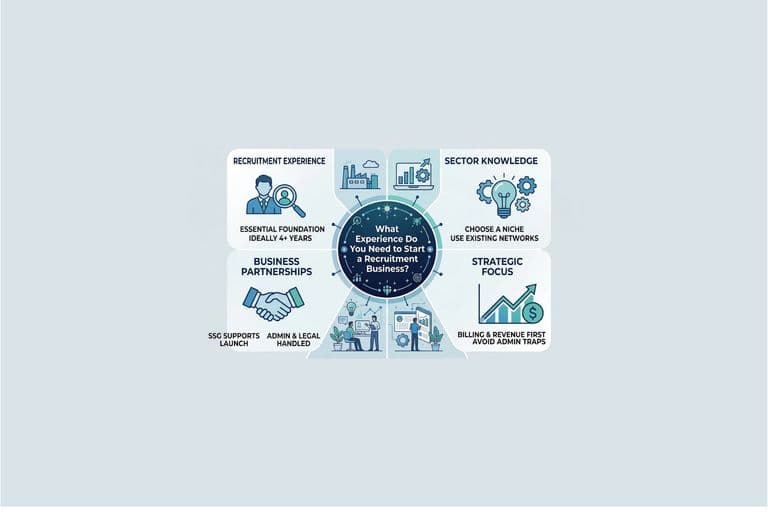
- Choosing a specialist niche helps you win clients faster than competing as a generalist against large established firms.
- SSG Recruitment Partnerships provides full back-office, technology, and compliance infrastructure so founders can focus on billing from day one.
- Founder isolation is a genuine risk, and building a peer network early protects both your mental health and your business decisions.
Why Experienced Recruiters Are Choosing Independence
The UK recruitment market is experiencing significant structural change. Companies House data published in 2026 shows 32,846 recruitment agencies currently registered in the UK, with closures outpacing new registrations for the first time. That statistic can feel discouraging, but it also reveals an opportunity.
Agencies closing in the current market tend to be generalist operations under two years old that lacked the operational foundations to survive a downturn. Experienced recruiters with strong client relationships, deep sector knowledge, and a clear niche are finding that independence offers better earnings and greater control.
The average employed recruiter retains roughly 25% of the fees they generate. Running your own agency allows you to keep the majority of your billings, build equity in a sellable asset, and design a working life that matches your personal goals.
Is Now the Right Time to Leave Your Agency?
Timing the move to independence requires honest self-assessment. The question is not whether you are a good recruiter. It is whether you are ready to run a business. Consider these factors before handing in your notice.
Financial Readiness
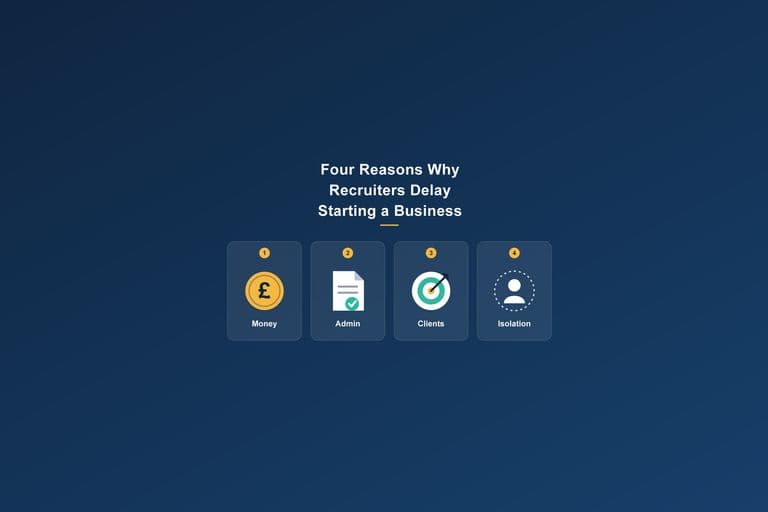
Calculate your minimum monthly personal expenses and ensure you can cover three to six months without any fee income. Factor in the gap between making a placement and receiving payment, which can stretch to 60 or even 90 days in permanent recruitment.
Explore funding options early. Some partnership models provide salary support during the launch phase, removing the financial cliff edge that stops many recruiters from taking the leap.
Client Relationships and Pipeline
Review your existing client relationships carefully. Do your clients work with you because of the agency brand, or because of the trust and track record you have built personally? If your relationships are genuinely yours, the transition becomes significantly less risky.
Check your employment contract for restrictive covenants. Non-compete and non-solicitation clauses vary widely, and understanding your legal position before you resign is essential.
Personal Circumstances
Consider your household situation honestly. A partner with a stable income, manageable debt levels, and no major financial commitments on the immediate horizon all reduce the risk of launching during a lean period.
How to Register and Structure Your Recruitment Business
Setting up a recruitment agency in the UK involves several legal and administrative steps. Getting the structure right from the start saves time, money, and compliance headaches later.
Choosing a Business Structure
Most independent recruiters operate as a limited company (Ltd). This structure separates your personal and business finances, provides tax efficiency through a combination of salary and dividends, and gives your agency a more professional appearance to clients and candidates.
You will need to register with Companies House, appoint at least one director, and file a confirmation statement annually. Corporation Tax, VAT registration (if turnover exceeds the threshold), and PAYE registration for any employees are also required.
Essential Registrations
Beyond Companies House, your new agency needs to register with the Information Commissioner's Office (ICO) for data protection. Recruitment businesses process significant volumes of personal data, and registration is a legal requirement under UK GDPR.
If you plan to place contractors, you may also need to register for the Construction Industry Scheme (CIS) depending on the sectors you serve. SSG Recruitment Partnerships handles company formation, ICO registration, and HMRC setup for its partners, which means founders can focus on building pipeline rather than filling out government forms.
Legal and Compliance Requirements for UK Recruitment Agencies
Compliance is not optional in recruitment, and the regulatory landscape has become more complex in recent years. Understanding your obligations before you start trading protects your reputation and your licence to operate.
The Conduct of Employment Agencies and Employment Businesses Regulations 2003
These regulations set out your core obligations as a recruitment agency, including the requirement to agree terms of business with clients before introducing candidates, to provide candidates with written terms, and to maintain adequate records. Breach of these regulations can result in enforcement action from the Employment Agency Standards Inspectorate.
IR35 and Off-Payroll Working Rules
If you supply contractors to medium or large end clients, the off-payroll working rules place specific obligations on your agency. You must take reasonable care when passing on the end client's Status Determination Statement and maintain an audit trail of every determination. Getting IR35 wrong can result in HMRC pursuing your agency for unpaid tax and National Insurance contributions.
UK GDPR and Data Protection
Recruitment agencies are data controllers under UK GDPR. You need a lawful basis for processing candidate personal data, documented retention policies, and transparent privacy notices. The ICO has issued specific guidance on using AI tools in recruitment, requiring Data Protection Impact Assessments before deploying any AI-powered screening or sourcing technology.
For a detailed breakdown of every compliance obligation, SSG Recruitment Partnerships has published a comprehensive compliance guide covering everything from contracts and insurance to right-to-work checks.
How to Fund Your Recruitment Agency Launch
Funding is one of the biggest barriers to going independent. Recruitment is a cash-intensive business, particularly if you are placing temporary or contract workers where you need to pay contractors before your client pays you.
Self-Funding
Some founders bootstrap their agency from personal savings. This approach gives you complete control but requires a significant financial cushion. You will need to cover company setup costs, technology subscriptions, job board access, marketing, and your own living expenses during the ramp-up period.
Invoice Factoring and Recruitment Finance
Invoice factoring allows you to receive a percentage of your outstanding invoices upfront, improving cash flow while you wait for client payments. Several providers specialise in recruitment finance and understand the payment cycles specific to the staffing industry.
Partnership and Investment Models
Partnership models offer an alternative approach. A strategic partner invests in your business infrastructure, covering everything from systems and technology to marketing and compliance, in exchange for a revenue share. This model eliminates the personal financial risk of launching alone and provides access to specialist support teams from day one.
SSG Recruitment Partnerships invests in recruitment entrepreneurs by providing salary support, funding, and a complete operational infrastructure. Partners retain 100% equity in their business, and the model is designed so that you can start billing within 48 hours of launch.
Building Your Technology Stack
Your technology decisions on day one will shape how efficiently your agency operates. A modern recruitment business needs integrated systems that reduce admin time and give you a professional edge.
CRM and Applicant Tracking System
A recruitment-specific CRM and ATS is the backbone of your operation. It manages candidate records, tracks client interactions, automates workflows, and helps you stay compliant with data protection requirements. Popular options include Bullhorn and JobAdder, both of which integrate with most UK job boards.
Communication and Productivity Tools
VoIP telephony, video conferencing software, and a professional email domain are non-negotiable from launch day. Candidates and clients expect to reach you easily, and a personal mobile number or free email address undermine credibility.
Job Board Access
Access to major UK job boards like LinkedIn Recruiter, Reed, and CV Library is essential for sourcing candidates. Job board subscriptions represent a significant ongoing cost, and negotiating preferential rates through a partner network can reduce your outgoings substantially.
SSG Recruitment Partnerships provides a fully configured technology stack to its partners, including CRM, VoIP, and job board access, all set up and ready to use from day one.
How to Win Your First Clients as an Independent Recruiter
Winning clients as an independent is different from winning clients as an employee of an established brand. You are now selling yourself, your expertise, and your new agency. Here is how to build a client base quickly.
Leverage Your Existing Network
Your strongest asset at launch is your reputation. Reach out to contacts you have built relationships with over the years. A personal message explaining your move and how you plan to serve their needs can open doors faster than any cold outreach campaign.
Define Your Niche Clearly
Specialist recruiters consistently outperform generalists in client acquisition. When you focus on a specific sector, role type, or geography, your pitch becomes sharper and your expertise more credible. Clients looking to fill niche positions will choose a specialist who understands their market over a generalist every time.
Develop a Business Development Routine
Allocate at least 40% of your time to business development in the first six months. Consistency matters more than intensity. A daily habit of outreach, follow-ups, and relationship building will compound over time and fill your pipeline.
Marketing and Branding Your New Recruitment Agency
A professional brand signals credibility to both clients and candidates. You do not need a large marketing budget, but you do need a clear identity and a plan to make your agency visible.
Brand Identity and Website
Your brand name, logo, and website are the first things prospective clients will see. A professionally designed website with clear messaging about your niche, your approach, and how to contact you is essential. SEO-optimised content helps your site appear in search results when potential clients are looking for recruiters in your specialist area.
SSG Recruitment Partnerships builds bespoke brands, websites, and pitch decks for its partners through its creative and technical team, giving new agencies a polished market presence from launch.
LinkedIn and Content Marketing
LinkedIn is the primary platform for recruitment marketing. Regular posts sharing market insights, hiring advice, and candidate availability position you as an expert in your sector. Over time, a consistent content strategy builds an audience that generates inbound enquiries.
Referrals and Word of Mouth
Satisfied clients and placed candidates are your most powerful marketing channel. Delivering an outstanding experience on every assignment creates a referral engine that reduces your dependence on outbound business development over time.
Managing Cash Flow and Credit Control
Cash flow problems are the single most common reason recruitment startups fail. You can be billing significant fees and still run into trouble if client payments are slow and your outgoings are fixed.
Set Clear Payment Terms from Day One
Include explicit payment terms in every client contract. Net 30 is standard in permanent recruitment, but some clients will push for 60 or even 90 days. The longer your payment terms, the more working capital you need to keep the business running.
Chase Invoices Promptly
Many recruiters feel uncomfortable chasing payments from clients they have worked hard to win. This is a mistake. A client who consistently pays late is not a good client. Structured credit control processes protect your cash flow and signal professionalism.
SSG Recruitment Partnerships provides dedicated credit control management for its partners, handling invoice collection so founders can stay focused on recruitment activity rather than chasing payments.
Handling the Emotional Challenges of Going Independent
The operational side of launching a recruitment agency gets most of the attention, but the emotional challenges are equally significant. Acknowledging them early makes the transition smoother.
Founder Isolation
Going from a busy office environment to working alone at home is a jarring transition. The absence of colleagues to share wins, troubleshoot problems, or simply chat with can affect your motivation and decision-making. Building connections with other founders reduces this isolation and gives you a sounding board.
SSG Recruitment Partnerships addresses this directly through the MY SSG community, a partner-only network of over 300 recruitment business owners who share knowledge, collaborate on placements through an exclusive fee-share platform, and support each other through the challenges of independence.
Imposter Syndrome and Self-Doubt
Even highly experienced recruiters can feel uncertain when they no longer have an established brand behind them. Imposter syndrome is common, particularly in the first few months. Recognising this as a normal part of the transition rather than a warning sign helps you push through the uncomfortable early phase.
Work-Life Balance
Independence gives you freedom, but it can also blur the boundary between work and personal life. Setting clear working hours, taking breaks, and protecting time for family and rest are not luxuries. They are essential for sustained performance over the long term.
Scaling Your Recruitment Business Beyond Launch
Once your agency is billing consistently, the next question is whether and how to grow. Scaling introduces new challenges, but it also creates the opportunity to build a business with real long-term value.
When to Hire Your First Employee
Hiring too early is a common mistake among recruitment founders. Wait until you have consistent revenue, a repeatable business development process, and enough work to justify a second pair of hands. Your first hire should free up your time for higher-value activities, not add overhead you cannot yet support.
Building a Sellable Asset
If your long-term goal is to build a business you can sell, start thinking about exit value from day one. A sellable recruitment agency has diversified client relationships, documented processes, a strong brand, and revenue that does not depend entirely on the founder. SSG Recruitment Partnerships has deep experience in mergers and acquisitions for recruitment businesses, helping partners build for value and exit on their terms.
Continued Professional Development
The recruitment market evolves constantly. Staying current with changes in employment law, technology, and hiring trends protects your competitive position. Attend industry events, participate in webinars, and invest time in learning new sourcing techniques and AI-enabled tools.
In Conclusion: Planning Your Path to Recruitment Independence
Going independent as a recruiter is a major decision that requires careful planning across financial, legal, operational, and emotional dimensions. The recruiters who succeed are those who prepare thoroughly, choose the right support structure, and commit to building their business with discipline and resilience.
You do not have to figure it all out alone. SSG Recruitment Partnerships exists to help recruitment entrepreneurs launch, build, and scale their own agencies with comprehensive operational support, funding, and a community of hundreds of founders who have walked the same path. If you are ready to explore what independence could look like for you, start a conversation with SSG and take the first step toward owning what you build.
FAQs About Going Independent as a Recruiter
How much money do you need to start your own recruitment agency?
The amount varies depending on your business model. Self-funded launches typically require several thousand pounds for company formation, technology, and living expenses during the ramp-up. Partnership models like SSG Recruitment Partnerships eliminate upfront costs by investing in your infrastructure, systems, and salary from day one.
How long does it take to make your first placement after going independent?
Most experienced recruiters who launch with an active pipeline make their first placement within four to eight weeks. SSG Recruitment Partnerships partners report an average time to first billing of 48 days, supported by immediate access to CRM, job boards, and a professional brand.
Do you need qualifications to run a recruitment agency in the UK?
No formal qualifications are legally required. However, you must comply with the Conduct of Employment Agencies and Employment Businesses Regulations 2003, UK GDPR, and other applicable legislation. Industry certifications such as the REC Level 3 Certificate in Recruitment Practice can strengthen your credibility with clients.
What are the biggest risks of leaving an agency to go independent?
Cash flow gaps, restrictive covenants in your employment contract, and the loss of established brand recognition are the most common risks. Working with a strategic partner like SSG Recruitment Partnerships reduces financial risk through salary support and funding while providing the operational infrastructure that would otherwise take months to build.
Can you keep your existing clients when you leave your agency?
This depends on your employment contract and the nature of your client relationships. Non-compete and non-solicitation clauses may restrict your ability to approach existing clients for a defined period. Always seek legal advice before contacting any client you worked with at your previous employer. SSG Recruitment Partnerships provides HR and legal support to help partners navigate these restrictions.