Everything you need to know about launching a recruitment business
Experienced recruiters often spend years dreaming about launching their own recruitment business. They know the industry, have strong client relationships, and possess the billing track record to succeed independently.

Experienced recruiters often spend years dreaming about launching their own recruitment business. They know the industry, have strong client relationships, and possess the billing track record to succeed independently. Yet many talented professionals delay taking the leap, not because they lack recruitment skills, but because they underestimate the operational demands of running a business.
Planning a recruitment agency requires more than a list of contacts and a laptop. From finance and compliance to marketing and technology, the infrastructure needs can overwhelm even the most accomplished billers. SSG Recruitment Partnerships supports recruitment entrepreneurs through every stage of business planning, helping partners launch in as little as four weeks with all the operational groundwork in place.
This guide walks you through the essential pre-launch planning areas that determine whether your recruitment business thrives or falters. You'll discover what experienced recruiters often overlook, how support services reduce risk, and where to focus your energy before you hand in your notice.
Key Takeaways: How to Plan a Recruitment Business Before You Launch
- Financial planning includes cash flow management, salary considerations during the startup phase, and understanding the typical 48-day timeline to first billing
- Legal and compliance setup covers company registration, contracts, IR35 obligations, and employment law requirements that protect your business from day one
- Marketing and brand development should start before launch, not after, to build your professional presence and attract your first clients
- SSG Recruitment Partnerships helps recruitment entrepreneurs increase their chances of success by 2.9 times through expert support across all operational areas
- Back-office operations including accounting, payroll, credit control, and technology need to be planned and resourced before you start billing
Why Do Experienced Recruiters Delay Starting Their Own Agency?
The gap between wanting to start a recruitment business and actually doing it often spans years. Research into recruitment startups reveals consistent patterns in why talented professionals hesitate.
Financial uncertainty tops the list. Without a guaranteed salary, many recruiters worry about meeting mortgage payments and family obligations during the startup phase. The time lag between making placements and receiving payment creates cash flow challenges that feel insurmountable when viewed from employed comfort.
Beyond finances, the sheer volume of operational tasks causes paralysis. Recruiters excel at finding candidates and winning clients. Managing accounting, legal compliance, technology infrastructure, and marketing campaigns represents an entirely different skill set. The fear of spreading themselves too thin prevents many from taking the first step.
What Financial Planning Does a Recruitment Startup Need?
Financial planning for a recruitment business extends far beyond calculating startup costs. You need a realistic picture of your cash flow, your income needs during the growth phase, and your funding options.
Understanding Your Cash Flow Timeline
Most recruitment agencies take between 30 and 90 days to receive payment after a placement. Meanwhile, you'll have monthly expenses from day one. Understanding this gap shapes your financial strategy.
The average time to first billing for new recruitment businesses sits around 48 days. During this period, you'll need to cover personal living expenses, business operating costs, and potentially contractor wages if you're placing temporary staff. Building a financial cushion or securing funding support removes the pressure that leads to poor decision-making.
Calculating Your Startup and Operating Costs
Your budget should account for these categories:
- Company formation and legal setup fees
- Technology infrastructure including CRM, telecoms, and job board access
- Brand development and website creation
- Marketing and lead generation activities
- Professional indemnity and liability insurance
- Accounting and bookkeeping services
- Your personal salary requirements for the first six months
Many recruitment entrepreneurs underestimate these costs or believe they can handle everything themselves. While bootstrapping sounds appealing, the hidden time cost of managing back-office tasks directly reduces your billing activity.
Exploring Funding and Support Options
Funding options for recruitment startups have expanded significantly. Traditional routes include personal savings, bank loans, and angel investors. Each carries different levels of risk and obligation.
Partnership models offer an alternative approach. SSG Recruitment Partnerships invests in recruitment businesses through a business funding model that removes the financial risk of leaving employment. Partners receive systems and services free for the first three months, allowing them to focus on billing rather than worrying about overhead costs.
What Legal and Compliance Requirements Must You Address?
Legal obligations for recruitment agencies extend beyond registering a company name. Understanding and meeting these requirements protects your business and builds client confidence.
Company Formation Essentials
Forming a limited company involves registration with Companies House, creating articles of association, appointing directors, and establishing share structures. While the process itself is straightforward, getting the documentation right from the start prevents complications later.
You'll also need to register for PAYE if you plan to employ staff, register for VAT once your turnover exceeds the threshold, and set up proper record-keeping systems. Working with professionals who understand recruitment-specific requirements saves time and ensures compliance.
Contracts and Legal Documentation
Your recruitment business needs a suite of contracts covering:
- Terms of business with clients for permanent placements
- Terms of business for temporary and contract workers
- Candidate registration and data protection agreements
- Employment contracts for any staff you hire
- Contractor agreements if you're placing temporary workers
Generic templates downloaded from the internet rarely protect recruitment businesses adequately. Industry-specific legal advice ensures your contracts reflect current legislation and protect your interests. This is where having access to specialist legal support makes a meaningful difference.
IR35 and Employment Law Considerations
IR35 legislation affects how you engage with contractors and how your clients engage with workers you supply. Misunderstanding these rules creates significant financial liability. You need processes to assess contractor status, document determinations, and communicate appropriately with all parties.
Employment law evolves constantly. From holiday pay calculations to national minimum wage compliance, keeping current requires ongoing attention. Building relationships with HR and legal professionals from the outset means you have expertise available when questions arise.
How Should You Plan Your Marketing and Brand Strategy?
Marketing for a recruitment business begins before you launch, not after. Your brand, online presence, and marketing channels should be operational from day one.
Developing Your Brand Identity
Your brand communicates your positioning, values, and expertise to clients and candidates alike. A professional brand identity includes your company name, logo, colour palette, typography, and visual style guidelines.
Many new agency owners underestimate the time required to develop a brand that stands out in a crowded market. Working with creative professionals who understand recruitment ensures your brand resonates with your target audience and differentiates you from competitors.
Building Your Online Presence
Your website serves as your digital shopfront. Candidates and clients will research you online before engaging. A professional website that loads quickly, displays well on mobile devices, and communicates your value proposition clearly is non-negotiable.
Beyond your website, you need:
- LinkedIn profiles optimised for visibility and credibility
- Google Business Profile for local search presence
- Social media accounts aligned with where your audience spends time
- Email infrastructure for professional communication
At SSG Recruitment Partnerships, our creative and technical team creates bespoke brands, websites, and marketing materials for recruitment agencies. This allows partners to focus on relationship building while their professional presence takes shape.
Planning Your Client Acquisition Strategy
Knowing how you'll win your first clients should be crystal clear before launch. Your strategy might include leveraging existing relationships, targeted outreach campaigns, networking activities, or content marketing.
Whatever approach you choose, document it. Write down your target clients, your value proposition to each segment, your outreach methods, and your follow-up processes. This planning prevents the scattered activity that burns time without producing results.
What Technology Infrastructure Does a Recruitment Business Require?
Technology choices affect your efficiency, your professional image, and your compliance obligations. Planning your technology stack before launch ensures smooth operations from day one.
Core Systems You'll Need
Every recruitment business requires:
- Customer Relationship Management (CRM) software designed for recruitment
- Applicant Tracking System (ATS) functionality
- Email and calendar integration
- Telephone and communication systems
- Document storage and sharing capabilities
- Job board access and posting tools
The recruitment technology market offers dozens of options at various price points. Selecting systems that integrate well together and scale with your business prevents costly migrations later. Experienced partners can advise on which combinations work best for different recruitment specialisms.
Data Protection and Security
Recruitment businesses handle sensitive personal data daily. GDPR compliance requires appropriate technical measures to protect candidate and client information. Your technology choices should support data security, access controls, and audit trails.
Documentation of your data protection practices isn't optional. You need policies, procedures, and records that demonstrate compliance. Building these into your operations from the start is far easier than retrofitting them later.
How Do Back-Office Operations Affect Your Launch Timeline?
Back-office operations often receive the least planning attention yet cause the most problems for new recruitment businesses. Understanding what's involved helps you allocate resources appropriately.
Accounting and Bookkeeping
From your first invoice to your year-end accounts, financial record-keeping requires consistent attention. You'll need systems for invoicing clients, tracking expenses, managing bank reconciliations, and preparing for tax obligations.
Most recruitment entrepreneurs lack accounting expertise and find financial administration tedious. Delegating this function to professionals ensures accuracy, compliance, and timely information for business decisions. Monthly management accounts show you how your business performs without waiting for annual accounts.
Payroll Management
If you place temporary workers or employ staff, payroll becomes a weekly or monthly obligation. Calculating wages, deducting tax and national insurance, processing payments, and filing RTI submissions must happen accurately and on time.
Payroll errors damage relationships with workers and create compliance headaches. Having experienced payroll professionals handle this function removes risk and frees your time for revenue-generating activities.
Credit Control and Cash Flow
Late payments from clients represent one of the biggest challenges for recruitment businesses. Effective credit control starts with proper client vetting, clear payment terms, and systematic follow-up processes.
Managing credit control yourself distracts from business development. Credit control experts recover prompt payments from clients and maintain the cash flow your business needs to operate smoothly.
Why Does Support Infrastructure Increase Success Rates?
Statistics consistently show that recruitment businesses with support infrastructure outperform those going it alone. Understanding why helps you make informed decisions about your launch approach.
The Risk of Wearing Too Many Hats
Recruitment entrepreneurs often believe they can handle everything themselves, at least initially. The reality proves different. Every hour spent on accounts, administration, technology troubleshooting, or marketing is an hour not spent billing.
New business owners frequently underestimate how much time non-billable activities consume. Before they know it, weeks pass without meaningful client or candidate activity. The business stalls, anxiety increases, and the initial enthusiasm fades.
How Partnership Models Reduce Risk
Partnership models address this challenge by providing infrastructure and support from day one. Instead of building everything yourself, you plug into established systems, processes, and expertise.
SSG Recruitment Partnerships has launched and invested in over 500 recruitment business founders. This experience means common problems get solved quickly, best practices get shared, and partners avoid mistakes that derail other startups. Partners are 2.9 times more likely to succeed than those who go it alone.
Access to Expertise You Can't Hire Alone
A startup recruitment business cannot afford to employ accountants, lawyers, marketers, and technology specialists. Yet access to these skills directly affects business outcomes.
Through partnership models, you gain access to multi-disciplined teams covering accounts, creative design, technical support, and business mentoring. This on-demand access to expertise would cost tens of thousands of pounds to replicate independently.
What Should Your Pre-Launch Checklist Include?
Before handing in your notice, work through these essential preparation areas to ensure you're ready to launch successfully.
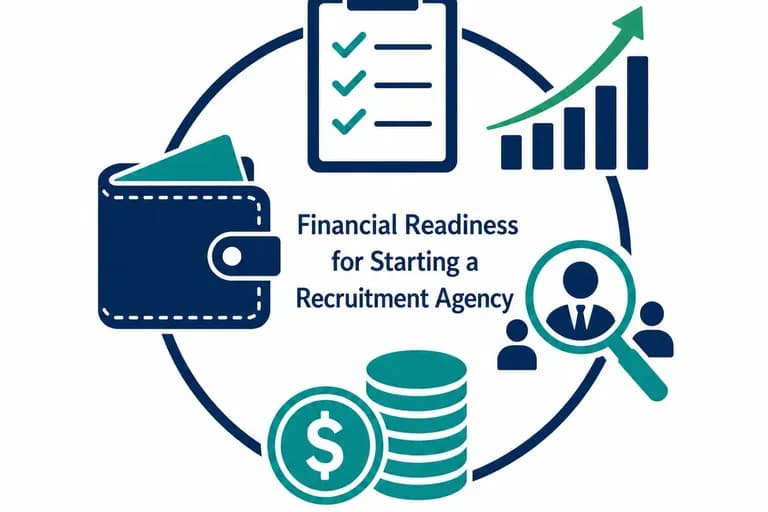
Financial Readiness
Confirm your funding approach, whether through savings, loans, or partnership support. Calculate your personal financial needs for at least six months. Understand your expected startup costs and ongoing overheads. Have a clear picture of how you'll manage cash flow during the gap between placements and payments.
Legal and Compliance Setup
Plan your company formation timeline. Identify what contracts and legal documents you'll need. Understand your insurance requirements. Know your obligations around data protection, employment law, and sector-specific regulations.
Operational Infrastructure
Select your technology systems or identify a partner who will help with technology provision. Arrange accounting and payroll support. Plan your credit control approach. Establish how you'll handle HR matters for any staff or contractors.
Marketing and Business Development
Develop your brand identity and visual assets. Build your website and online presence. Create your client acquisition strategy. Prepare your launch communications and networking plans.
Personal Preparation
Prepare yourself mentally for the transition from employee to business owner. Build your support network of mentors and advisors. Set realistic expectations for the first year. Plan for work-life balance in a role without traditional boundaries.
How Can You Accelerate Your Launch While Reducing Risk?
The traditional approach to starting a recruitment agency involves months of preparation, significant personal investment, and considerable uncertainty. Alternative models exist that compress this timeline while reducing risk.
Partnership models designed specifically for recruitment entrepreneurs offer a different path. With the right support, experienced recruiters can launch their own business in as little as four weeks, with all the infrastructure, technology, and back-office support in place from day one.
SSG Recruitment Partnerships invests in recruitment businesses by covering initial costs and providing ongoing support across finance, operations, legal, marketing, and technology. Partners retain full control over their business decisions and client selection while benefiting from expert guidance and established systems.
The average first-year earnings for SSG partners significantly exceed what they earned in employment. This happens because partners spend their time on billing activities rather than administrative tasks. The infrastructure supports them; they focus on what they do best.
In Conclusion: Planning Your Recruitment Business for Long-Term Success
Planning a recruitment business thoroughly before launch dramatically increases your chances of success. The operational demands often underestimated by experienced recruiters can overwhelm a new business if not addressed properly.
Financial planning, legal compliance, marketing strategy, technology infrastructure, and back-office operations all require attention before you make your first placement. Trying to build these foundations while simultaneously billing leads to gaps that compromise the business.
Support services exist precisely because these challenges are so common. Whether you choose to build everything yourself or partner with specialists who understand recruitment entrepreneurship, the key is honest assessment of what you need and how you'll get it.
Your recruitment skills got you this far. Thoughtful business planning will carry you forward. Take the time to prepare properly, line up your support infrastructure, and launch with confidence in your operational foundations.
FAQs About How to Plan a Recruitment Business Before You Launch
How long does it take to start a recruitment agency?
The timeline varies based on your preparation and approach. Going it alone typically takes three to six months to complete all setup tasks. SSG Recruitment Partnerships helps partners launch in as little as four weeks by handling company formation, technology setup, branding, and back-office infrastructure. The average time to first billing once launched is around 48 days.
What qualifications do I need to start a recruitment agency?
No formal qualifications are required to start a recruitment agency in the UK. Industry experience proves far more valuable. Most successful recruitment entrepreneurs have strong billing track records, established networks, and deep knowledge of their chosen sector. Business planning skills and operational understanding matter more than academic credentials.
How much does it cost to start a recruitment agency?
Startup costs range from several thousand pounds to significantly more depending on your approach. Expenses include company formation, technology, branding, marketing, insurance, and operating capital. SSG Recruitment Partnerships invests in partners by covering systems and services free for the first three months, dramatically reducing the personal financial outlay required to launch.
What is the biggest challenge when starting a recruitment business?
Cash flow management represents the most common challenge. The gap between making placements and receiving payment strains new businesses, especially when combined with ongoing operating costs. Planning your financial runway and arranging appropriate support reduces this risk. Many recruitment entrepreneurs also underestimate the time required for non-billable activities like administration and marketing.
Should I specialise in a particular recruitment niche?
Specialisation typically leads to stronger market positioning and client relationships. Generalist agencies face intense competition from established players with broader reach. Focusing on sectors or roles where you have deep experience and contacts allows you to add genuine value and command better fees. Your niche choice should reflect your expertise, network, and market opportunity.
Do I need an office to start a recruitment agency?
Physical office space is not required to start a recruitment business. Many successful agencies operate entirely remotely, meeting clients at their premises or in shared meeting spaces. Working from home reduces overhead costs during the startup phase. SSG Recruitment Partnerships supports home-based businesses, helping recruitment startups avoid the costs associated with office rental while maintaining professional operations.

-768x512.webp&w=3840&q=75)