The Complete Guide to Recruitment Startup Support 2026
Running a successful recruitment agency involves far more than filling roles. Behind every placement sits a web of company registration, branding decisions, recruitment startup support requirements, systems integration, and regulatory compliance.
Running a successful recruitment agency involves far more than filling roles. Behind every placement sits a web of company registration, branding decisions, recruitment startup support requirements, systems integration, and regulatory compliance. Getting these foundations wrong can delay your first invoice by months or expose you to fines before you've billed a single fee.
This guide walks you through each pillar of recruitment business startup services, from creating a brand that attracts your target market, to building the technology stack that keeps your operations running, to meeting the compliance obligations that protect you and your candidates. You'll also see how SSG Recruitment Partnerships helps recruitment entrepreneurs like you move from employed recruiter to independent agency owner in as little as four weeks.
Key Takeaways: The Complete Guide to Recruitment Startup Support
- Recruitment startup support covers branding, systems setup, compliance, and operational infrastructure for new agencies.
- A professional brand identity, including logo, website, and pitch materials, builds client confidence from day one.
- Integrated CRM, telephony, and job board access form the technology backbone your agency needs to operate.
- SSG Recruitment Partnerships gives recruitment entrepreneurs full back-office, branding, and compliance support from launch.
- Choosing the right startup support partner can reduce founder risk and accelerate your time to first placement.
What Are Recruitment Business Startup Services?
Recruitment business startup services are specialist support packages designed for recruiters launching independent agencies. They cover the operational, creative, legal, and technical groundwork that sits between your decision to go independent and your first day of billing.
These services typically span three core areas: branding and creative design, technology and systems integration, and regulatory compliance setup. Some partners bundle all three together. Others focus on a single discipline, leaving you to coordinate the rest yourself.
The goal is consistent: remove the administrative and technical barriers so you can concentrate on what generates revenue, which is winning clients and placing candidates.
Why Startup Support Matters for New Recruitment Agencies
How Founder Risk Increases Without Specialist Support
Launching a recruitment agency means becoming responsible for company formation, HMRC registrations, data protection compliance, brand creation, IT infrastructure, payroll, and credit control all at once. Each of these carries its own deadlines, regulations, and cost implications.
Without specialist help, the time you spend on these tasks is time taken directly away from business development and billing. According to a 2026 legal checklist published by Sprintlaw, founders who trade before completing contracts, privacy documents, and registrations risk disputes and penalties from their earliest days.
How Startup Support Reduces Time to First Placement
A structured startup support programme compresses the launch timeline by handling multiple workstreams in parallel. While your brand and website are being built, your CRM and telephony can be configured, and your legal and compliance paperwork can be prepared simultaneously.
This parallel approach is exactly how SSG Recruitment Partnerships operates through its Starting a recruitment business partnership, where partners typically go live and start billing in four weeks or less.
How to Evaluate Branding Services for a Recruitment Startup
What Should a Recruitment Agency Brand Package Include?
Your brand is the first thing a prospective client or candidate sees. A recruitment-specific branding package should cover logo design, a full visual identity system (colour palette, typography, and iconography), and a defined tone of voice that reflects your market positioning.
Beyond the logo, you'll need pitch decks, email templates, social media assets, and branded document templates. These materials need to be ready before you launch, not weeks after.
Why Generic Branding Falls Short for Recruitment Agencies
A recruitment agency's brand has to work across two distinct audiences: hiring managers and candidates. Generic small-business branding services often miss this dual requirement. Recruitment-focused branding partners understand the need for authority with clients and accessibility with candidates at the same time.
SSG Recruitment Partnerships' Creative and Marketing team designs bespoke brands, websites, pitch decks, LinkedIn campaigns, SEO, and content specifically for recruitment agencies. Your brand, website, and marketing materials are professionally crafted and ready before you take your first call.
What Technology and Systems Does a Recruitment Startup Need?
Recruitment CRM and Applicant Tracking Systems
Your CRM is the operational heart of your agency. It stores candidate records, tracks client interactions, manages job orders, and measures your pipeline activity. For a startup, the CRM needs to be configured for recruitment-specific workflows from day one rather than adapted from a generic sales tool.
Look for a CRM that includes candidate management, client tracking, job board integration, and reporting dashboards. The system should allow you to segment candidates by sector, skill set, and location so you can respond to briefs quickly.
Telephony, Email, and Productivity Tools
Recruitment is a telephone-intensive profession. VoIP telephony gives you a professional business line, call recording for compliance, and the flexibility to work from anywhere. Pair this with a business email domain, cloud storage, and collaboration tools to complete your communications setup.
Job Board Access and LinkedIn Recruiter
Access to major job boards (such as Reed and CV Library) and LinkedIn Recruiter licences is essential for sourcing candidates. Negotiating these individually as a solo startup typically means higher costs and longer contract commitments. You can learn more about what's included in launching a recruitment agency.
Through SSG Recruitment Partnerships, partners access job boards and LinkedIn Recruiter licences at preferential rates negotiated through collective buying power. This means you get the same candidate-sourcing tools as established agencies, configured and ready from your first day.
Why Integrated Systems Beat a Patchwork Approach
Selecting and connecting a CRM, telephony provider, email platform, job boards, and cloud storage separately takes significant time and technical knowledge. Integrating these tools so they share data and work together is a project in itself.
A bundled technology stack service removes this complexity. SSG Recruitment Partnerships' Systems and Technology offering sets up, trains, and manages a recruitment-focused technology stack for its partners, covering CRM, VoIP, job boards, and automation so everything is optimised for how you actually recruit.
What Compliance and Legal Requirements Apply to Recruitment Startups?
Company Formation and Registration
Before you can trade, you'll need to register your company with Companies House, obtain your Certificate of Incorporation, prepare your First Board Minutes and Memorandum and Articles of Association, and register for Corporation Tax, VAT, and PAYE through HMRC. If you're placing contractors in the construction sector, CIS registration may also be required.
SSG Recruitment Partnerships handles the entire company formation process as part of its Business Launch service, including Companies House registration, Data Protection registration with the ICO, and Government Gateway setup.
The Conduct of Employment Agencies and Employment Businesses Regulations 2003
The Conduct Regulations are the primary legislation governing recruitment agencies and employment businesses in England, Scotland, and Wales. They set out your obligations around information sharing with clients and candidates, suitability checks for temporary workers, restrictions on fees charged to work-seekers, and record-keeping requirements.
If you plan to place temporary workers, additional obligations apply around Agency Workers Regulations (AWR), payroll, pension auto-enrolment, and holiday pay calculations. According to the REC's legal framework guide, the distinction between a permanent recruitment agency and a temporary staffing business is critical because each model triggers different compliance requirements.
Data Protection and GDPR Obligations
Recruitment agencies process significant volumes of personal data: CVs, salary histories, references, right-to-work documentation, and interview notes. UK GDPR and the Data Protection Act 2018 require you to have a lawful basis for processing this data, clear privacy notices, defined retention periods, and appropriate security measures.
You'll also need to register with the ICO and pay the data protection fee. Failing to do so before you begin operating can result in enforcement action, regardless of your agency's size.
Insurance Requirements for New Recruitment Agencies
At a minimum, you'll need professional indemnity insurance, which protects you if a client claims financial loss from a placement decision. If you employ staff, employers' liability insurance is a legal requirement. Public liability insurance is also recommended, and if you're supplying temporary workers, you may need additional employment practices liability cover.
How to Assess the Financial Side of Recruitment Startup Support
What Costs Are Involved in Launching a Recruitment Agency?
Startup costs for a recruitment agency typically include company formation fees, legal and compliance setup, branding and website design, technology licensing, job board access, and working capital to cover the gap between placing candidates and receiving client payments.
Cash flow is one of the biggest operational risks in recruitment, particularly for agencies placing temporary workers. You'll often need to pay contractors weekly while waiting 30 to 60 days for client invoice settlement.
How Different Startup Support Models Handle Costs
Some startup support partners charge upfront fees for each service. Others bundle services into a partnership model where costs are spread over time or tied to revenue.
SSG Recruitment Partnerships invests significantly in new partner businesses during the first three months, offering systems and services at no cost while you get established. This investment model means your initial outlay is kept low, and you can focus on billing from day one rather than managing setup expenses. Partners retain 100% equity in their recruitment businesses throughout.
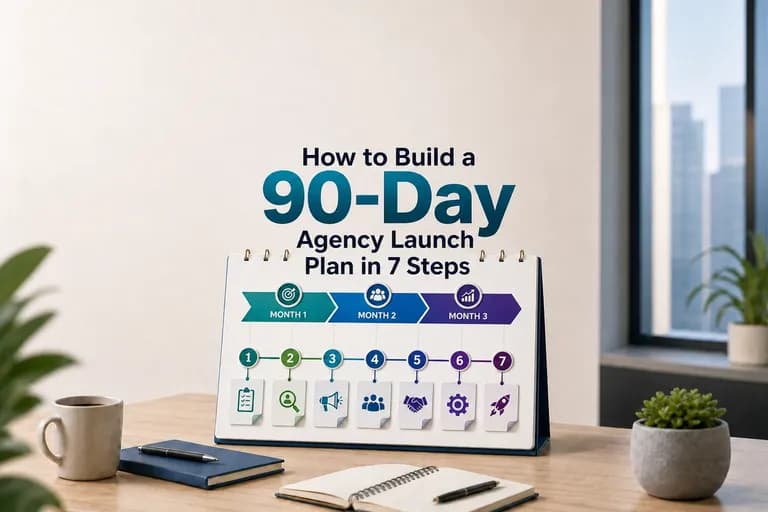
Step-by-Step: How to Launch Your Recruitment Agency With Startup Support
Step 1: Define Your Recruitment Model and Market
Before selecting a startup support partner, clarify whether you'll focus on permanent placements, temporary staffing, contract recruitment, or a combination. Define your target sectors and geographic focus. Your model determines your compliance requirements, technology needs, and branding approach.
Step 2: Choose a Startup Support Partner and Agree Your Plan
Evaluate potential partners on the breadth of their service offering, their recruitment industry expertise, and how they structure costs. Ask for details on what the partnership includes (and what it doesn't), what timelines are realistic, and how ongoing support works after launch.
At SSG Recruitment Partnerships, the process starts with a conversation about your ambitions, sector, and timeline. Together, you build a business plan, agree commercials, and design your brand. The entire setup typically takes four weeks.
Step 3: Complete Company Formation and Compliance Setup
Register your company, set up your HMRC accounts, register with the ICO, prepare your terms of business, and arrange your insurance. If you're using a startup support partner, these steps are typically handled on your behalf.
Step 4: Build Your Brand and Marketing Presence
Your logo, visual identity, website, pitch decks, and social media profiles should all be designed and published before you contact your first prospect. A strong brand signals professionalism and commitment to your market.
Step 5: Set Up Your Technology Stack
Configure your CRM, telephony, email, cloud storage, and job board access. Test integrations between these systems to confirm that data flows correctly, and complete training so you're confident using every tool from day one.
Step 6: Launch and Start Billing
With your brand live, systems configured, and compliance in place, you're ready to start business development. Your focus from this point should be on building client relationships and placing candidates, not on back-office administration.
What to Look for When Comparing Recruitment Startup Support Partners
Breadth of Service Offering
The most effective startup support covers branding, technology, compliance, accounting, payroll, credit control, HR, and legal support under one roof. A partner that handles all of these functions saves you from coordinating multiple providers, which is time you could spend recruiting.
Recruitment Industry Specialism
Generic business startup services lack the sector knowledge that recruitment demands. Look for partners with deep experience in recruitment operations, who understand placement fee structures, AWR compliance, IR35 implications, and contractor payroll requirements.
SSG Recruitment Partnerships has launched and invested in over 500 recruitment businesses across permanent, temporary, and contract sectors, bringing more than 20 years of recruitment-specific expertise to every partner engagement.
Ongoing Support After Launch
Launching is only the beginning. The strongest startup support partners assign you a dedicated account manager for ongoing strategic advice, regular business reviews, and performance tracking. This ongoing relationship is what separates a genuine partnership from a one-off setup service.
SSG Recruitment Partnerships assigns every partner a dedicated Partner Support Manager for weekly check-ins, growth planning, and annual strategy reviews, so you always have a sounding board as your business develops.
Community and Peer Network Access
Running a recruitment agency can be isolating, particularly in the first year. Access to a community of other recruitment founders gives you a space to share challenges, swap strategies, and collaborate on roles.
Through the MY SSG community, partners connect with a network of recruitment entrepreneurs for peer support, shared knowledge, and access to an exclusive fee-share platform for collaborative placements. For more on how back-office outsourcing supports new agencies, read our detailed breakdown.
Common Mistakes to Avoid When Choosing Recruitment Startup Support
Underestimating the Compliance Workload
Many first-time founders focus on branding and technology but underestimate the volume of legal and compliance work required. Conduct Regulations, data protection, employment law, and insurance are non-negotiable foundations that need to be addressed before you start trading.
Choosing Cost Over Depth of Support
The lowest-cost startup package is rarely the most complete. If it leaves you managing your own payroll, bookkeeping, credit control, or legal compliance, the time and risk costs quickly outweigh any savings. Evaluate total cost of ownership, including your own time.
Ignoring the Post-Launch Period
Some support partners focus entirely on the launch phase and offer little beyond it. Your first year of trading will surface questions about cash flow, legal red flags, client contracts, scaling, and team hiring that require experienced guidance. Confirm what ongoing support looks like before you commit.
In Conclusion: How to Choose the Right Recruitment Startup Support for Your Agency
Choosing the right recruitment startup support comes down to three questions. Does the partner cover branding, systems, and compliance in a single offering? Do they have genuine recruitment industry expertise across permanent, temporary, and contract models? And will they stay invested in your success beyond launch day?
If you're an experienced recruiter considering the move to agency ownership, the right support partner can compress your launch timeline, reduce your operational risk, and free you to focus on the work that generates revenue. SSG Recruitment Partnerships is committed to your success, and our team is here to help you every step of the way to ensure that your recruitment agency thrives.
FAQs About Recruitment Startup Support
What does recruitment startup support typically include?
Recruitment startup support covers company formation, branding, website design, CRM and technology setup, compliance registration, and ongoing back-office services like accounting and payroll.
SSG Recruitment Partnerships bundles all of these into a single partnership, so you can launch your agency in as little as four weeks.
How long does it take to launch a recruitment agency with startup support?
With a structured support partner, most recruitment agencies go live in four to six weeks. SSG Recruitment Partnerships handles branding, technology, compliance, and back-office setup in parallel to achieve a four-week launch timeline.
Do I need specialist compliance support to start a recruitment agency?
Yes. Recruitment agencies must comply with the Conduct Regulations, UK GDPR, and employment legislation. Failure to meet these requirements can result in fines and client contract disputes.
SSG Recruitment Partnerships handles compliance setup as part of its Business Launch service, including Data Protection registration and legal documentation.
Can I retain full ownership of my recruitment business with a startup support partner?
Some models require equity stakes, while others allow full ownership. SSG Recruitment Partnerships allows partners to retain 100% equity in their recruitment businesses, which means you own what you build from day one.
What technology do I need to run a recruitment agency?
At a minimum, you need a recruitment CRM or applicant tracking system, VoIP telephony, business email, cloud storage, and access to job boards.
SSG Recruitment Partnerships' Systems and Technology service configures and manages this entire stack for its partners, including CRM, VoIP, LinkedIn Recruiter, and job board access.

-768x512.webp&w=3840&q=75)
-768x512.webp&w=3840&q=75)