Turning Client Relationships Into Recruitment Revenue
If you have strong client relationships and a proven billing track record, the idea of starting a recruitment agency feels like a natural next step.

If you have strong client relationships and a proven billing track record, the idea of starting a recruitment agency feels like a natural next step. You already know your market, your candidates trust you, and clients pick up the phone when you call. That foundation matters.
But relationships alone do not build a viable business. The operational, financial, and compliance demands of running an independent recruitment agency catch many experienced recruiters off guard. This guide covers every barrier between where you are now and a recruitment business that actually works.
SSG Recruitment Partnerships has spent more than 21 years helping recruitment entrepreneurs bridge that gap. The sections below walk you through cash flow, compliance, systems, funding, and the operational foundations you need before you hand in your notice.
Key Takeaways: Turning Client Relationships Into Recruitment Revenue
- Client relationships are essential but insufficient on their own to sustain a recruitment business launch.
- Cash flow gaps between paying workers and receiving client payments cause more agency failures than poor sales performance.
- Legal compliance covering IR35, GDPR, contracts, and employment law requires specialist infrastructure from day one.
- SSG Recruitment Partnerships provides back-office support, funding, and technology so founders can focus on billing.
- Building operational foundations before launch dramatically increases your chances of surviving the critical first year.
Why Client Relationships Are Not Enough to Launch a Recruitment Business
Every recruiter who considers going independent starts with the same assumption: if my clients follow me, the revenue will follow too. In some cases, that holds true for the first few months. Referrals come in, placements land, and the early numbers look encouraging.
The problem surfaces when the operational reality catches up. You still need to pay contractors before your clients pay you. You need compliant contracts, payroll infrastructure, data protection registration, and professional indemnity insurance. None of that runs on goodwill.
According to Armstrong Watson's 2025 analysis, 181 recruitment businesses entered liquidation in the six months to August 2025, representing an 18% increase year on year. Strong relationships did not save those agencies. Operational resilience did.
What Are the Real Barriers to Starting a Recruitment Agency?
The barriers that stop recruitment businesses from succeeding rarely have anything to do with the ability to recruit. They sit in five distinct categories: cash flow, compliance, technology, administration, and funding. Each one can stall or sink a new agency if left unaddressed.
Understanding these barriers before you launch gives you the opportunity to plan around them rather than react to them. The sections below break down each category in detail.
Cash Flow: The Barrier That Closes More Agencies Than Competition
You can bill significant revenue every month and still run out of money. The mechanics are straightforward: you pay workers weekly, but clients pay you monthly or later. That timing gap creates a cash flow deficit that grows with every placement you make.
Research published by the REC and Bibby Financial Services in 2026 found that 34% of recruitment firms reported worsened cash flow positions in 2025. More than 40% said cash flow pressures had directly constrained their growth.
For a startup agency without reserves, this gap is not a minor inconvenience. It determines whether you can meet payroll, pay HMRC on time, and keep your business operations running while you wait for invoices to clear.
Legal Compliance: IR35, GDPR, and Employment Law
Recruitment sits at the intersection of employment law, data protection, and tax compliance. If you place contractors, you need to manage IR35 assessments, right-to-work checks, and intermediary reporting. If you place permanent candidates, your terms of business and fee agreements need to be legally watertight.
Data protection registration with the ICO is mandatory. GDPR governs how you collect, store, and process candidate information. Getting any of this wrong exposes you to regulatory fines and reputational damage that no client relationship can undo.
Many new agency founders underestimate the volume of compliance work required. It is not a one-off task at registration. It is an ongoing operational responsibility that demands specialist knowledge or professional support.
Technology and Systems: Building Your Operational Stack
A recruitment business needs a CRM or applicant tracking system, a VoIP phone system, email infrastructure, job board access, and a professional website. Each of these tools costs money and takes time to configure properly.
The technology decisions you make at launch shape your daily workflows for months or years. Choosing the wrong CRM, failing to integrate your systems, or underestimating training time creates friction that slows your billing activity precisely when you need it most.
SSG Recruitment Partnerships removes this barrier entirely by providing partners with a fully configured technology stack that includes CRM, VoIP, job boards, and LinkedIn Recruiter access. Your systems are ready on day one, not day ninety.
Administration: The Hidden Time Drain
Bookkeeping, VAT returns, PAYE submissions, credit control, invoicing, and contract management consume hours every week. These tasks do not generate revenue, but neglecting them creates problems that halt revenue entirely.
When you work for an employer, an entire back-office team handles these functions invisibly. As an independent founder, every hour you spend on administration is an hour you are not spending on client development, candidate sourcing, or closing placements.
The most common pattern among failed startups is a founder who excels at recruitment but drowns in operational tasks within the first six months. Recognising this pattern before launch is the first step toward avoiding it.
Funding: Surviving the Pre-Revenue Period
Most recruitment agencies take several weeks or months to generate consistent income. During that period, you still need to cover personal living costs, business overheads, and potentially contractor payroll.
Self-funding limits how long you can sustain the business before revenue arrives. Invoice finance or factoring can bridge some gaps, but these arrangements come with their own costs, conditions, and administrative requirements.
The funding question is not just about having enough money. It is about having the right funding structure that aligns with how recruitment cash flow actually works, including the reality that your biggest months can create your largest cash deficits.
How to Assess Whether Your Recruitment Business Is Viable Before Launch
Viability planning is the step most aspiring agency owners skip. They focus on what they know, which is recruitment, and assume the business side will sort itself out. A proper viability assessment covers several critical areas before you commit.
Start with your financial runway. Calculate how many months of personal and business expenses you can cover with zero revenue. Include contractor payroll if you plan to place temps or contractors. If the answer is fewer than three months, your funding plan needs work.
Compliance and Operational Readiness Checks
Assess your compliance readiness. Do you know the specific legal requirements for your sector and placement type? Have you identified the contracts, registrations, and insurance policies you need before making your first placement?
Evaluate your operational capacity. Who handles payroll, bookkeeping, and credit control? Who builds your website and configures your CRM? If the answer to every question is "me," you are planning to do the work of five specialists while simultaneously billing.
What Does a Recruitment Business Need Beyond Client Relationships?
A viable independent recruitment business requires infrastructure across seven core functions. Each function operates continuously from the moment you launch, and each one demands either your time or specialist support.
Company Formation and Legal Setup
Registering a limited company involves more than filing with Companies House. You need a certificate of incorporation, first board minutes, share certificates, a registered office address, and registrations with HMRC for Corporation Tax, VAT, PAYE, and the Government Gateway.
Data protection registration, professional indemnity insurance, and employer's liability insurance follow. Each registration has its own timeline, and delays at this stage push back your entire launch.
Financial Management and Accounting
Your accounting function covers bookkeeping, monthly management accounts, VAT returns, Corporation Tax returns, PAYE submissions, CIS registration where applicable, and annual accounts preparation. If you place contractors, add contractor payroll, RTI submissions, and P11D processing.
SSG Recruitment Partnerships handles all of this through a dedicated accounting and payroll service. Partners receive monthly financial reporting without needing to hire an in-house finance team.
Credit Control and Cash Collection
Chasing invoices is one of the most time-consuming tasks in a recruitment business. Late-paying clients disrupt your cash cycle and create knock-on effects across payroll, tax payments, and operating expenses.
Professional credit control involves setting payment terms, monitoring aged debt, chasing overdue invoices systematically, and assessing client creditworthiness before you take on new business. Without this discipline, even a high-billing agency can find itself unable to meet obligations.
Marketing, Branding, and Digital Presence
Your brand, website, and digital presence establish credibility with both clients and candidates. A professional website, consistent social media activity, and targeted content marketing position you as a specialist in your sector rather than another generalist startup.
SSG Recruitment Partnerships provides a Creative and Marketing team that designs bespoke brand identities, builds websites, produces pitch decks, and supports LinkedIn campaigns and SEO. Your market-facing presence is ready before you make your first call.
HR, Legal Advisory, and Contract Management
Employment contracts for your own staff, terms of business with clients, candidate agreements, and ongoing employment law guidance all require professional input. As employment legislation evolves, your contracts and policies need regular review.
For recruitment businesses placing contractors, the IR35 framework adds another layer of complexity. Determining employment status, managing client responsibilities, and documenting your assessment process all require compliant procedures.
Technology Infrastructure
Your technology stack needs to be integrated, supported, and optimised for recruitment workflows. That means a CRM that connects to your email, a VoIP system that logs call activity, job board integrations that post vacancies automatically, and cloud storage for candidate data that meets GDPR standards.
Choosing, purchasing, configuring, and maintaining these systems requires either significant personal time or access to dedicated technical support. SSG Recruitment Partnerships provides a fully managed systems and technology service so partners can focus on placing candidates.
Strategic Support and Mentoring
Running an independent business brings decisions that fall outside your recruitment expertise. Pricing strategy, growth planning, team structure, market positioning, and exit planning all benefit from experienced guidance.
SSG Recruitment Partnerships assigns every partner a dedicated Partner Support Manager who provides weekly check-ins, annual strategic reviews, and ongoing business advice. This relationship turns isolated decision-making into collaborative planning.
How SSG Recruitment Partnerships Removes the Launch Barriers
SSG Recruitment Partnerships exists to solve the exact problem this guide describes. Recruitment entrepreneurs have the sector knowledge and client relationships to succeed, but they lack the operational infrastructure to translate those strengths into a sustainable business.
SSG invests in your business from day one. That investment includes funding, a fully configured technology stack, accounting and payroll services, credit control, HR and legal advisory, creative branding, and a dedicated Partner Support Manager.
What Partners Retain and What SSG Delivers
Partners retain 100% equity in their recruitment business. SSG takes a revenue share that decreases as your billings grow, which means the partnership is structured around your success rather than a fixed cost that drains your resources.
SSG partners earn on average more than twice what they earned in employment. The average time from launch to first billing is 48 days. With more than 500 businesses launched across four continents, SSG has built the infrastructure and experience to handle every challenge a new recruitment agency faces.
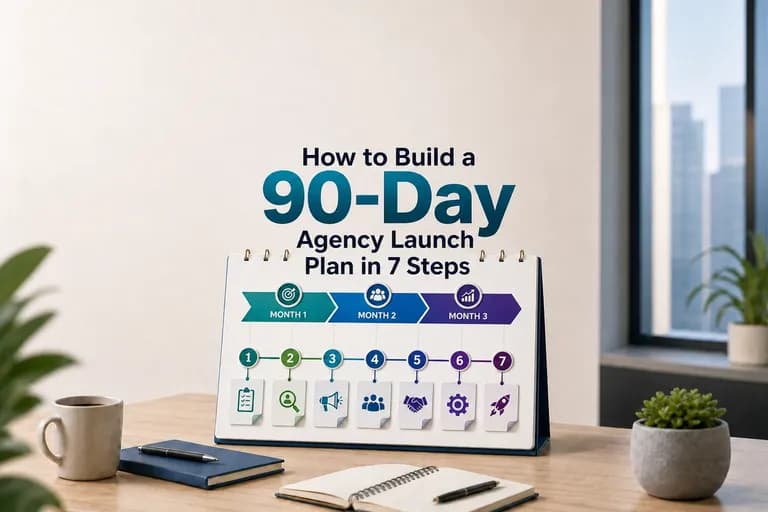
Step-by-Step: How to Plan Your Recruitment Business Launch
Planning your launch properly takes discipline, but it follows a logical sequence. The steps below give you a framework for moving from consideration to operational readiness.
Step 1: Define Your Niche and Market Position
Choose a sector, geography, or placement type where you have genuine expertise and existing relationships. Your niche should be specific enough to differentiate you from generalist agencies but broad enough to sustain consistent billing.
Analyse the demand dynamics of your chosen niche. Are placements repeat or one-off? Are payment cycles fast or slow? Is the talent pool accessible? These factors determine how quickly your agency can generate sustainable revenue.
Step 2: Build Your Financial Plan
Map out your personal costs, business overheads, and projected revenue month by month for the first year. Include contractor payroll obligations if applicable. Identify the gap between when expenses begin and when revenue arrives, and plan how you will fund that gap.
Your financial plan should account for slow-paying clients, seasonal fluctuations, and the reality that your first placements may take longer to close than you expect.
Step 3: Secure Your Funding and Support Structure
Decide whether you will self-fund, seek invoice finance, or partner with an organisation that provides both funding and operational support. Each option carries different levels of risk, cost, and administrative burden.
A partnership model like SSG Recruitment Partnerships provides removes the funding barrier entirely. SSG provides capital and all operational infrastructure, allowing you to focus exclusively on business development and placements.
Step 4: Establish Your Legal and Compliance Foundation
Register your company, obtain necessary insurance, register with HMRC, and set up your data protection registration. Prepare your standard contracts, terms of business, and candidate agreements. If you place contractors, ensure your IR35 processes are documented and compliant.
This step takes longer than most founders expect. Allowing adequate lead time prevents a situation where you are ready to bill but legally unable to trade.
Step 5: Configure Your Technology and Operations
Set up your CRM, email, phone system, job board access, website, and cloud storage. Train yourself on every system before you start making client calls. Operational stumbles in your first week undermine the professional credibility you have spent years building.
If you partner with SSG, your entire technology stack is configured and tested before your launch date. You move straight from planning to billing without a technology gap.
Step 6: Launch and Focus on Revenue
With your infrastructure in place, your launch becomes about doing what you do best: building relationships, sourcing candidates, and making placements. Every operational distraction that has been removed from your plate translates directly into more time on the phone and more revenue in your pipeline.
Common Mistakes Recruitment Entrepreneurs Make Before Launch
Knowing what goes wrong for other founders helps you avoid the same pitfalls. The mistakes below appear consistently across recruitment startup failures.
Underestimating the Cash Flow Gap
The gap between paying workers and receiving client payments is the single most common cause of recruitment agency failure. Founders who plan only for profitability without planning for cash timing run out of money while technically profitable on paper.
Trying to Do Everything Alone
Recruitment entrepreneurs are resourceful by nature. That resourcefulness becomes a liability when it means handling payroll, marketing, compliance, IT, and credit control alongside your actual recruitment work. The maths does not work when one person tries to fill five specialist roles.
Delaying Compliance Setup
Some founders treat compliance as something they will sort out later. This approach creates legal exposure from the moment they make their first placement. Contracts, insurance, data protection, and tax registrations need to be in place before you start billing, not after.
Choosing Technology Based on Price Rather Than Fit
The cheapest CRM is rarely the most productive one. Technology decisions should be based on how well a system integrates with your workflow, your job board access, and your reporting needs. The cost of switching systems six months in always exceeds the cost of choosing correctly at launch.
How the Recruitment Market Outlook Affects Your Launch Decision
The UK recruitment market is recovering from a challenging period. The REC's Recruitment Industry Status Report 2024/25 recorded a 5.3% decline in real Gross Value Added in 2025, but forecast a 4.4% growth for 2026. That trajectory matters for anyone planning a launch.
A recovering market means rising client demand, which creates opportunities for well-prepared agencies. It also means that agencies which launched during the downturn without adequate infrastructure are now under pressure, opening gaps in the market for properly supported newcomers.
Temporary and contract placements accounted for 76.7% of GVA in 2024, making the temp and contract sector a reliable revenue base for agencies with the payroll infrastructure to support it. If your niche includes contractor placements, your cash flow planning and payroll capability become even more critical.
Why Viability Planning Separates Successful Founders From Failed Startups
The difference between a recruitment business that thrives and one that closes within 18 months almost never comes down to recruitment ability. It comes down to whether the founder treated their launch as a business decision or a career decision.
A career decision says: I can bill, therefore I can run an agency. A business decision says: I can bill, and I have the funding, compliance, systems, and operational support to sustain the business while I do it.
SSG Recruitment Partnerships has launched over 500 recruitment businesses. That track record exists because SSG treats every launch as a business decision, building the operational foundations that allow recruitment talent to convert into recruitment revenue.
If you are ready to explore what that looks like for your specific situation, a conversation with SSG is the logical next step.
FAQs About Starting an Independent Recruitment Business
How much funding do I need to start a recruitment agency?
The amount depends on your placement type, niche, and personal costs. Contractor-focused agencies require more working capital because of payroll timing gaps. SSG Recruitment Partnerships provides business funding to partners, removing the need for significant personal capital at launch.
Can I start a recruitment business from home?
Yes. Many recruitment entrepreneurs operate successfully from home, particularly in the early stages. SSG Recruitment Partnerships supports home-based partners with cloud-hosted systems, VoIP phone access, and full back-office infrastructure that works from any location.
How long does it take to make my first placement after launching?
Timelines vary depending on your sector and existing pipeline. SSG Recruitment Partnerships partners average 48 days from launch to first billing, supported by a CRM loaded with tools and a dedicated Partner Support Manager guiding their early activity.
Do I need recruitment industry experience to launch an agency?
Yes. Running a recruitment business requires genuine sector knowledge, client relationships, and candidate sourcing skills. SSG Recruitment Partnerships works with experienced recruiters who have a proven billing track record and understand their chosen market.
What compliance requirements apply to a UK recruitment agency?
UK recruitment agencies must comply with employment law, IR35 legislation for contractor placements, GDPR for candidate data handling, and HMRC requirements for PAYE, VAT, and Corporation Tax. SSG Recruitment Partnerships handles compliance setup and ongoing management through its HR, legal, and accounting services.
How does SSG Recruitment Partnerships differ from other startup support providers?
SSG Recruitment Partnerships invests in your business with funding, infrastructure, and ongoing operational support while you retain 100% equity. The partnership model covers accounting, payroll, legal, IT, marketing, and credit control, allowing you to focus entirely on recruiting and billing from day one.

-768x512.webp&w=3840&q=75)
-768x512.webp&w=3840&q=75)