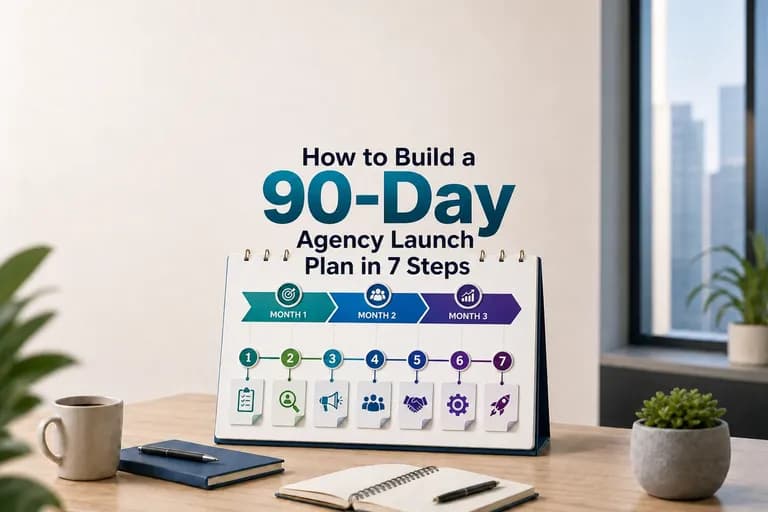
How to Build a 90-Day Agency Launch Plan in 7 Steps
You have spent years building a billing desk, winning clients, and placing candidates. Turning that track record into your own recruitment agency is the logical next step.
You have spent years building a billing desk, winning clients, and placing candidates. Turning that track record into your own recruitment agency is the logical next step. The operational challenge is knowing what to do first, what runs in parallel, and where one missed registration stalls everything else.
A structured 90-day launch plan turns a complicated startup process into a clear sequence of weekly priorities. SSG Recruitment Partnerships compresses these milestones so recruitment entrepreneurs can move from initial planning to first billing in as little as four weeks.
This guide maps the first 90 days into seven actionable steps covering company setup, compliance, technology, branding, cash flow, client development, and your first placement.
Quick Guide: How to Build a 90-Day Agency Launch Plan in 7 Steps
- Define your niche, model, and business plan. Research your target sector, choose between permanent, contract, or temporary placements, and draft a business plan.
- Register your company and open business accounts. Form your limited company at Companies House, register with HMRC, and set up a business bank account.
- Set up compliance, contracts, and insurance. Arrange employers' liability insurance, draft terms of business, and register for data protection.
- Build your technology stack and CRM. Select and configure a recruitment CRM, VoIP telephony, job board access, and email systems.
- Create your brand identity and website. Develop your logo, agency website, pitch materials, and LinkedIn presence to attract candidates and clients.
- Establish cash flow, invoicing, and credit control. Set up accounting software, agree payment terms, and put a credit control process in place before invoicing.
- Launch client outreach and secure your first placement. Reconnect with your professional network, win your first retained or contingent brief, and bill.
How to Build Your Recruitment Agency Launch Plan Step by Step
1. Define your niche, model, and business plan
Your first week should focus entirely on the decisions that shape every step after it. Choosing a niche you already know well, whether that is IT contracting, healthcare, engineering, or finance, gives you a head start because you understand the roles, the salary bands, and the hiring managers.
Next, decide on your revenue model. Permanent placements generate one-off fees after a candidate starts. Temporary and contract placements create recurring margin but require payroll funding and additional compliance obligations under the Agency Workers Regulations 2010.
With your niche and model confirmed, draft a business plan that covers your target market, financial projections, and a month-by-month cash flow forecast. This plan becomes your operational roadmap for the remaining 80 days.
2. Register your company and open business accounts
Company formation is the gateway step. Every other registration depends on having a Companies House incorporation number. Register your limited company, receive your certificate of incorporation, and record your first board minutes and share certificates.
Once incorporated, register with HMRC for Corporation Tax, PAYE, and VAT if your projected turnover will exceed the VAT threshold. You will also need a Government Gateway account to manage these registrations online.
Open a dedicated business bank account in your company name. Most banks require your certificate of incorporation and at least one form of director identification. SSG Recruitment Partnerships handles company formation and HMRC registrations as part of its launch process, so partners can move straight to the next step without administrative delays.
3. Set up compliance, contracts, and insurance
Compliance setup should run in parallel with company registration. The Conduct of Employment Agencies and Employment Businesses Regulations 2003 set the legal framework for all UK recruitment agencies. Familiarise yourself with these obligations before you take your first brief.
Arrange employers' liability insurance with a minimum cover of £5 million. This is a legal requirement as soon as you hire your first employee. Professional indemnity insurance is not legally mandated but protects you against claims arising from the candidates you place.
Draft your terms of business for both temporary and permanent placements, prepare assignment schedules, and create a privacy notice that meets UK GDPR requirements. If you plan to supply contractors to medium and large end clients, understand your IR35 off-payroll obligations before you engage your first worker.
Register with the Information Commissioner's Office for data protection. This registration must be in place before you process any candidate personal data.
4. Build your technology stack and CRM
Your technology stack is the operational backbone of your agency. By weeks two and three, you should have a recruitment CRM or applicant tracking system configured and populated with your existing candidate and client data.
Beyond the CRM, you need VoIP telephony, email hosting, cloud storage, and job board access. Platforms such as LinkedIn Recruiter, Reed, and CV Library connect you to candidate pools from day one. Integrating these tools into a single workflow reduces manual administration and frees up billing hours.
SSG Recruitment Partnerships provides partners with a fully managed technology stack including CRM, telephony, and job board access, supported and maintained by a dedicated technical team. This investment in your business means you are operational from the moment you launch, rather than spending weeks evaluating and configuring individual tools.
5. Create your brand identity and website
Branding is not a cosmetic exercise. Your agency name, logo, website, and pitch materials shape how hiring managers and candidates perceive your credibility before they ever speak to you.
During weeks two and three, commission or create your visual identity, a professional agency website, and a LinkedIn company page optimised for your target niche. Your website should clearly communicate your sector specialism, your approach, and how to get in touch.
Prepare a pitch deck that outlines your service offering, your sector knowledge, and the value you bring to clients. If you are placing temporary workers, include detail on your compliance processes, as this reassures end clients that you operate within the law.
6. Establish cash flow, invoicing, and credit control
Cash flow planning is the most underestimated step in the first 90 days. New recruitment businesses typically take around 48 days to achieve their first billing. During that period, you need a clear plan for covering your personal salary, business operating costs, and any contractor payments if you are running a temporary desk.
Set up your accounting software (Xero, for example) and configure invoicing templates before your first placement. Agree payment terms with clients upfront, typically 30 days for permanent fees and weekly or monthly for temporary margins.
Put a credit control process in place from day one. Chasing late invoices consumes time that should be spent on business development. SSG Recruitment Partnerships assigns credit control specialists to manage collections on behalf of partners, so recruitment entrepreneurs can focus on billing rather than payment chasing.
7. Launch client outreach and secure your first placement
By day 30, your company is registered, your compliance is in place, your systems are live, and your brand is visible. Now the focus shifts entirely to revenue generation.
Start by mapping your existing professional network. Former clients, colleagues, and industry contacts represent your warmest opportunities. Reach out with a clear message about your new agency, your niche specialism, and the value you offer.
Set weekly targets for business development calls, LinkedIn outreach, and candidate engagement. Track your activity in your CRM so you can measure conversion rates and adjust your approach as you move through months two and three.
By the end of your 90-day plan, you should have a pipeline of active roles, a shortlist of engaged candidates, and your first placement completed or in progress. The operational foundations you built in weeks one through four are what make this timeline achievable.
What Compliance Obligations Do New Recruitment Agencies Face?
New UK recruitment agencies must comply with the Conduct of Employment Agencies and Employment Businesses Regulations 2003, which govern how you engage with candidates and clients. These regulations require specific record-keeping, transparent fee agreements, and restrictions on charging work-seekers.
Data protection is another immediate obligation. Under UK GDPR, you must have a lawful basis for processing candidate personal data, a documented retention policy, and transparent privacy notices. Registration with the Information Commissioner's Office is required before you handle any candidate information.
If you supply temporary or contract workers, the Agency Workers Regulations 2010 require you to provide qualifying pay and conditions after 12 weeks on assignment. IR35 off-payroll working rules add further obligations when supplying contractors to medium and large end clients.
According to the REC's Recruitment Industry Status Report 2024/25, the UK recruitment sector contributed £40.6 billion to the economy in 2024. Regulatory compliance remains a defining factor for agency sustainability across those 31,000-plus enterprises.
How Long Does It Realistically Take to Start Billing?
Most new recruitment agencies take between six and twelve weeks to complete their first placement, depending on their niche, their existing network, and whether they are placing permanent or temporary candidates. Permanent placements often have longer sales cycles because the hiring process includes multiple interview stages and notice periods.
Temporary and contract placements can generate revenue faster because the time from brief to worker start is shorter. The trade-off is that temporary desks require payroll funding, which means you need cash reserves or a funding line to pay workers before your client pays you.
Founders who launch with a structured support partner typically bill sooner. SSG Recruitment Partnerships reports that partners achieve first billing in an average of 48 days, because the operational setup runs in parallel rather than in sequence. That compression matters: every week you spend on administration rather than business development is a week without revenue.
How SSG Recruitment Partnerships Helps You Launch in 90 Days or Less
Launching a recruitment agency involves genuine operational complexity, from compliance registrations and financial setup to technology configuration and brand development. That complexity is exactly why SSG Recruitment Partnerships exists.
SSG invests in your business from day one, covering company formation, HMRC registrations, contracts, insurance, branding, website design, CRM setup, job board access, telephony, accounting, payroll, and credit control. Every operational function is handled by specialists so you can focus on what really matters: winning business and finding top talent for your clients.
As the market-leader in supporting and investing in recruitment businesses, SSG has launched and invested in over 500 recruitment founders across permanent, temporary, and contract sectors. Your dedicated Partner Support Manager provides weekly check-ins, growth planning, and strategic advice throughout your first 90 days and beyond.
Systems and services are provided free for the first three months, which means you start with the same infrastructure as an established agency without bearing setup costs. Let us help you build the recruitment business you have been planning. Start a conversation with SSG and move from employed recruiter to independent agency owner.
FAQs About Building a Recruitment Agency Launch Plan
How much does it cost to start a recruitment agency in the UK?
Costs vary depending on your model and whether you handle setup yourself or use a support partner. Company registration, insurance, data protection, technology, and branding represent the main expense categories. SSG Recruitment Partnerships covers these startup costs through its investment model, so partners launch with zero upfront charges.
Do I need a recruitment licence to operate in the UK?
Most UK recruitment agencies do not require a specific licence. The exception is agencies supplying workers into agriculture, horticulture, shellfish gathering, or associated food processing, which require a Gangmasters and Labour Abuse Authority licence. All agencies must comply with the Conduct Regulations and relevant employment legislation.
What technology do I need before I start recruiting?
At minimum, you need a recruitment CRM or applicant tracking system, VoIP telephony, email hosting, and access to at least one job board. SSG Recruitment Partnerships provides partners with a fully managed technology stack from day one, including CRM, telephony, job boards, and cloud infrastructure.
Can I run a recruitment agency from home?
Yes. Many successful recruitment agencies operate entirely from home, particularly in the early stages. You need a reliable internet connection, a professional phone system, and a quiet workspace. Your registered office address can be your home address or a virtual office. SSG Recruitment Partnerships supports home-based partners with full back-office infrastructure.
How do I manage cash flow before my first placement?
Cash flow management is critical during the pre-billing period. Options include personal savings, a business funding line, or launching with a partner who provides salary support. SSG Recruitment Partnerships invests in partners from day one, including operational cost coverage during the launch phase.
What is the biggest mistake new recruitment agencies make?
The most common mistake is underestimating the operational setup time and trying to handle compliance, technology, branding, and finance simultaneously without specialist support. This delays billing and increases the risk of compliance gaps that can result in fines or reputational damage.